Avatar Identity & Moral Decision-Making (Honours Dissertation Project)
The Aims
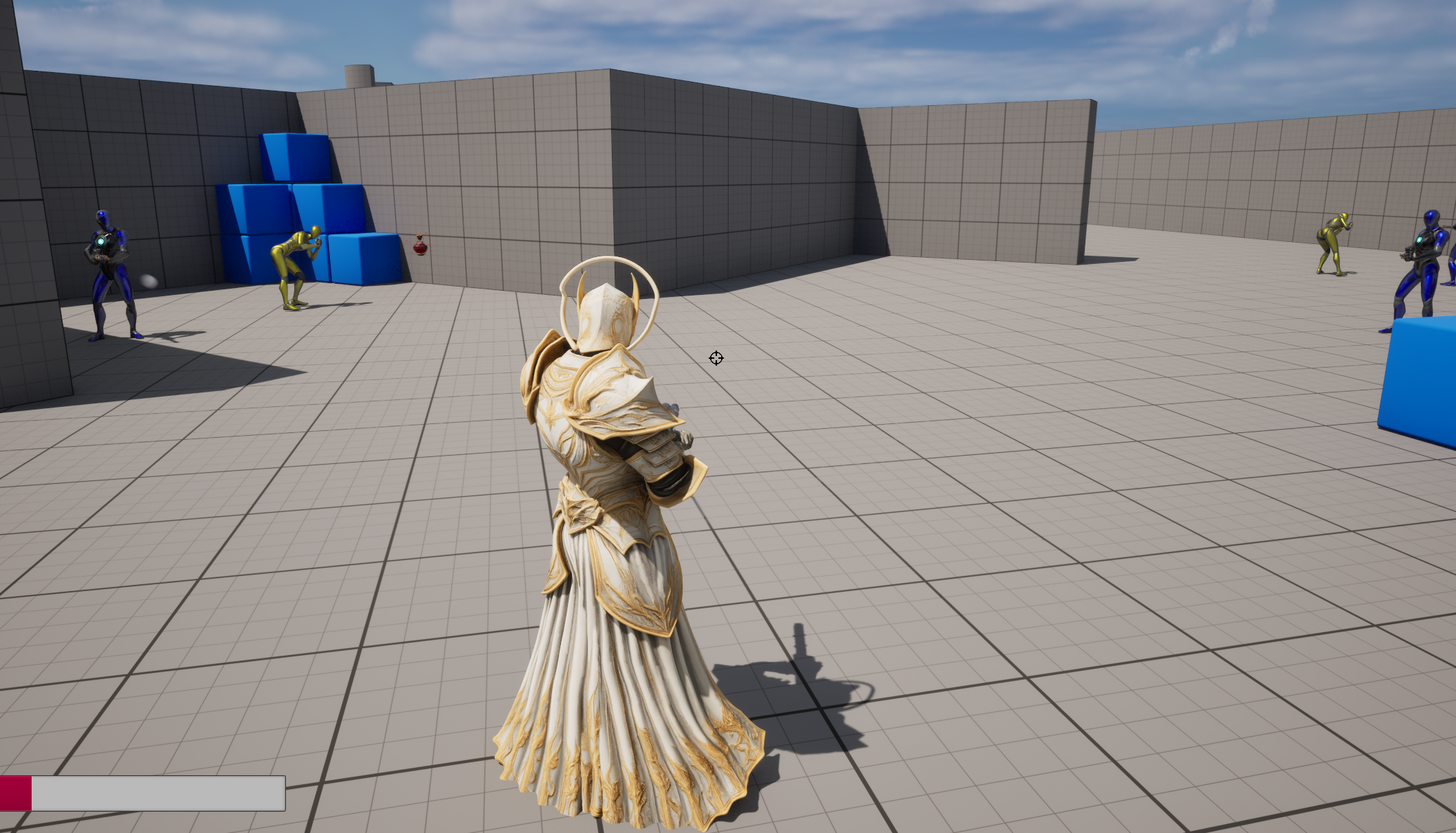
This project explores how avatar identity influences player behaviour, specifically focusing on moral decision-making in gameplay. Developed as part of my Honours dissertation at Glasgow Caledonian University, the project combines gameplay prototyping with user research to investigate how visual design cues can shape player actions.
I designed and built a third-person shooter prototype in Unreal Engine to test how different avatar presentations affect player behaviour in morally ambiguous situations.
Third-person shooter combat system (player + AI projectiles)
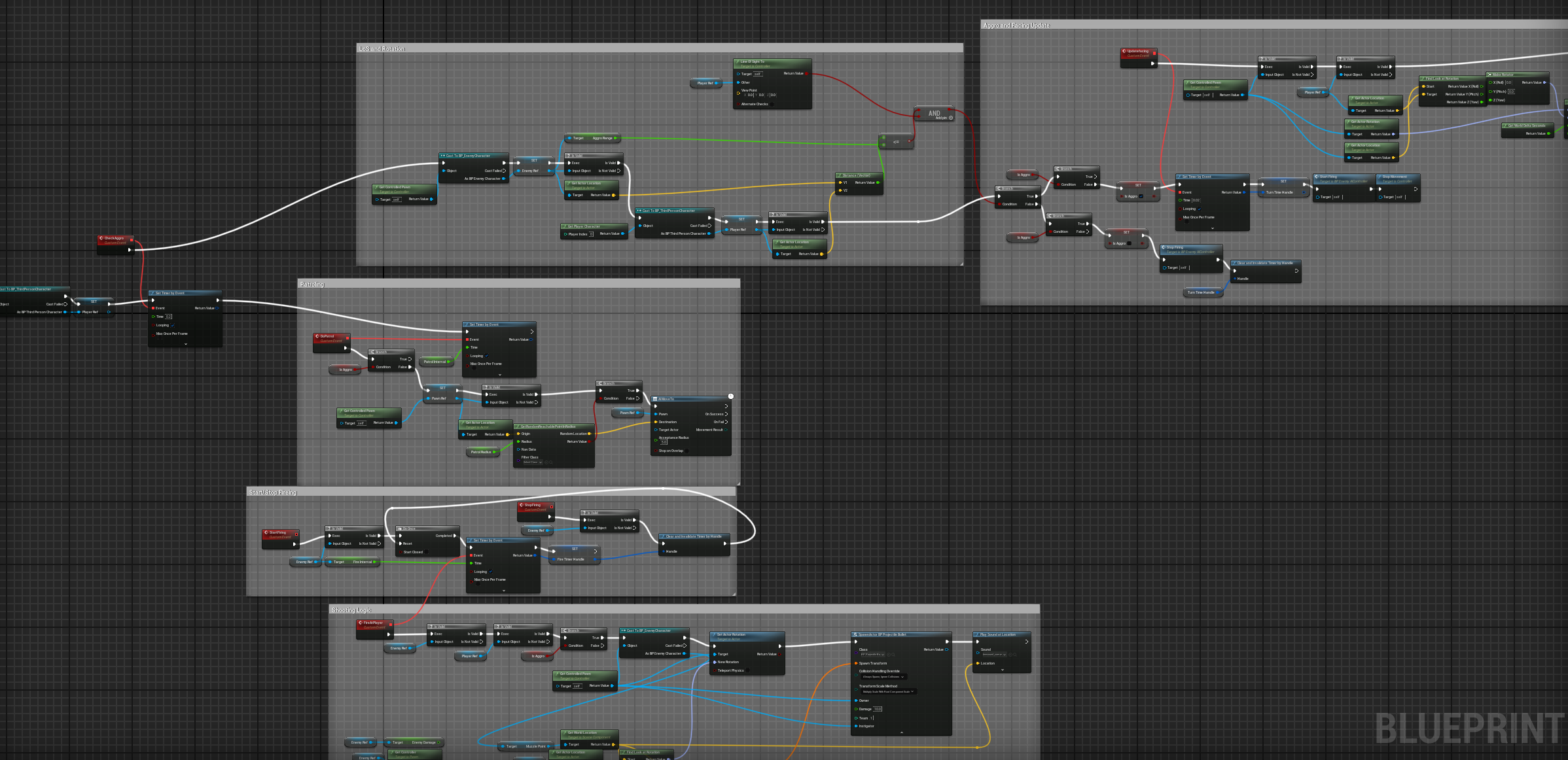
Enemy AI with patrol behaviour, line-of-sight detection, and aggro logic
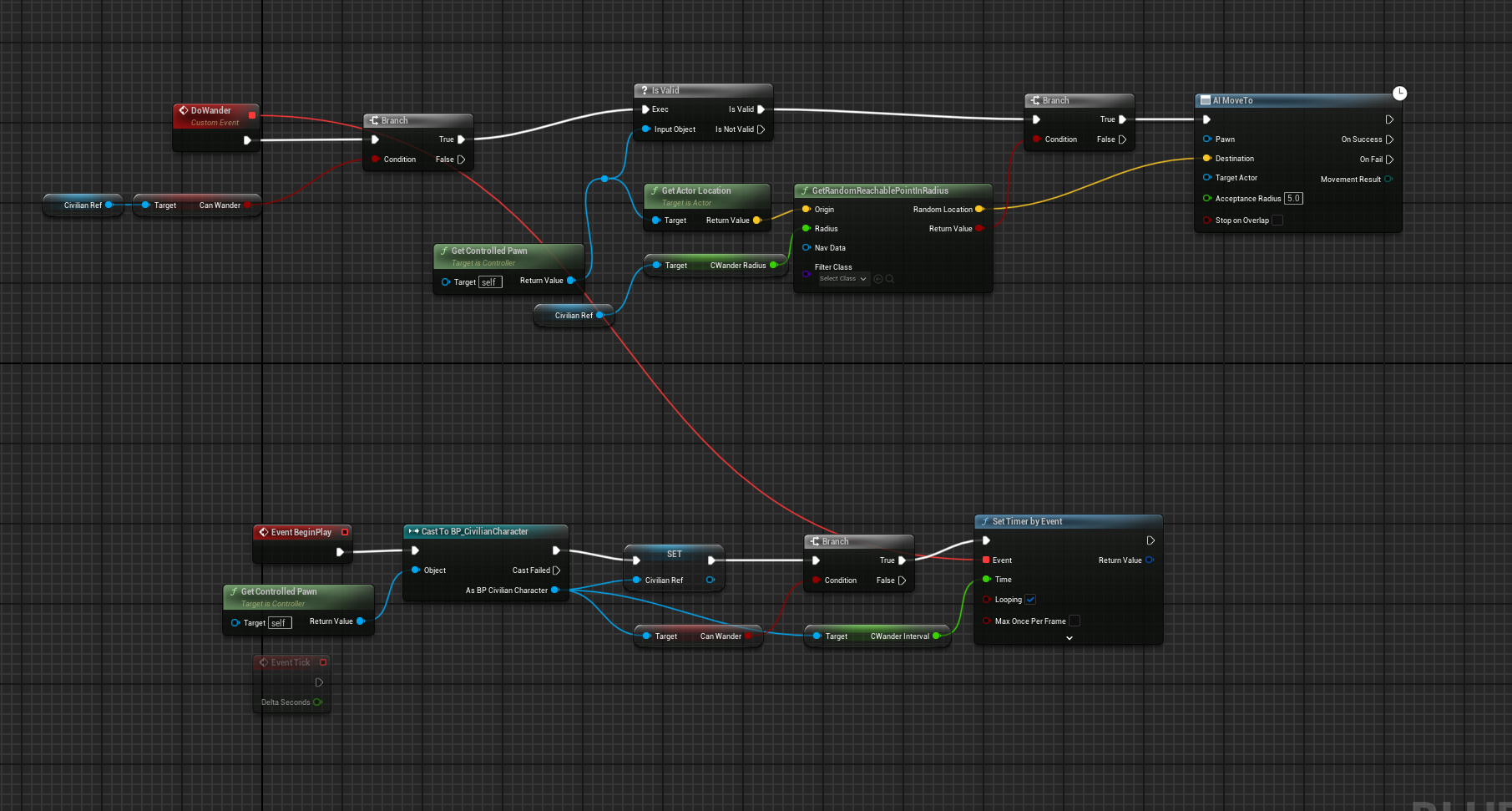
Civilian NPC system integrated into combat spaces
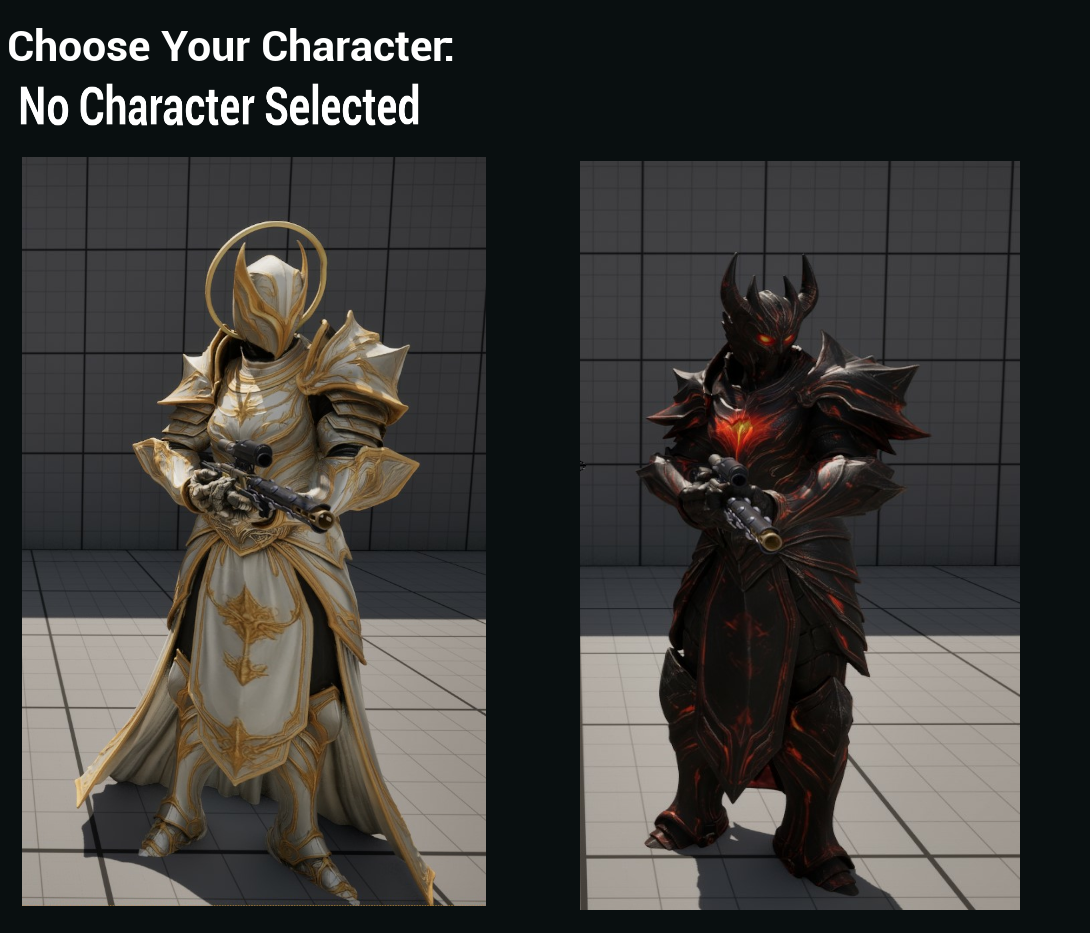
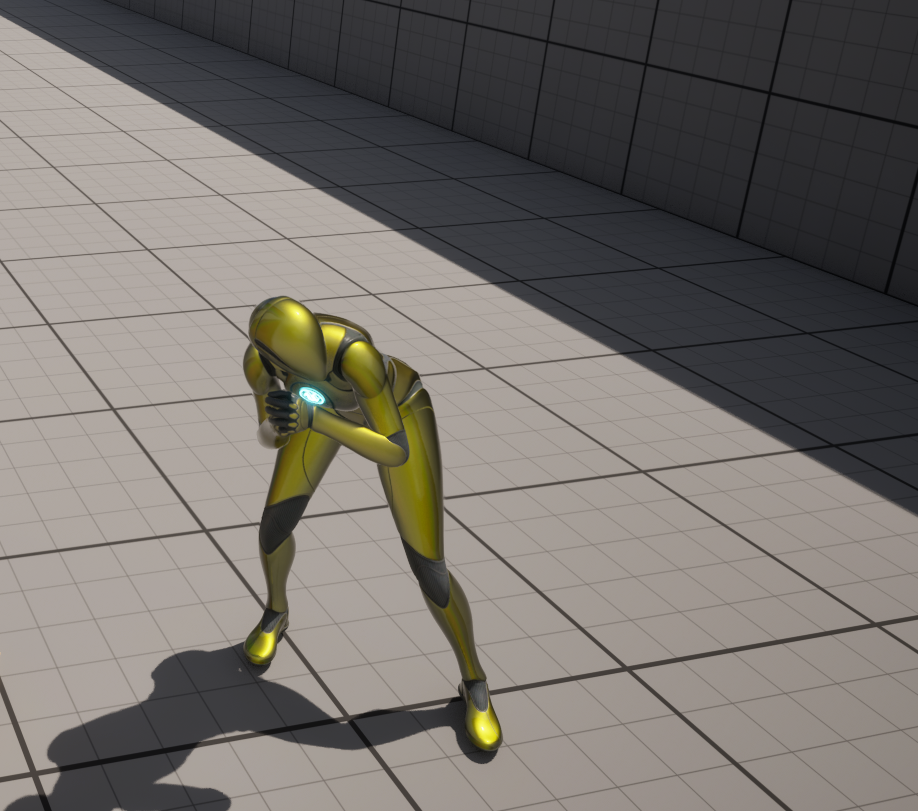
Avatar selection system with visual and labelled conditions
Gameplay logging system capturing player behaviour metrics
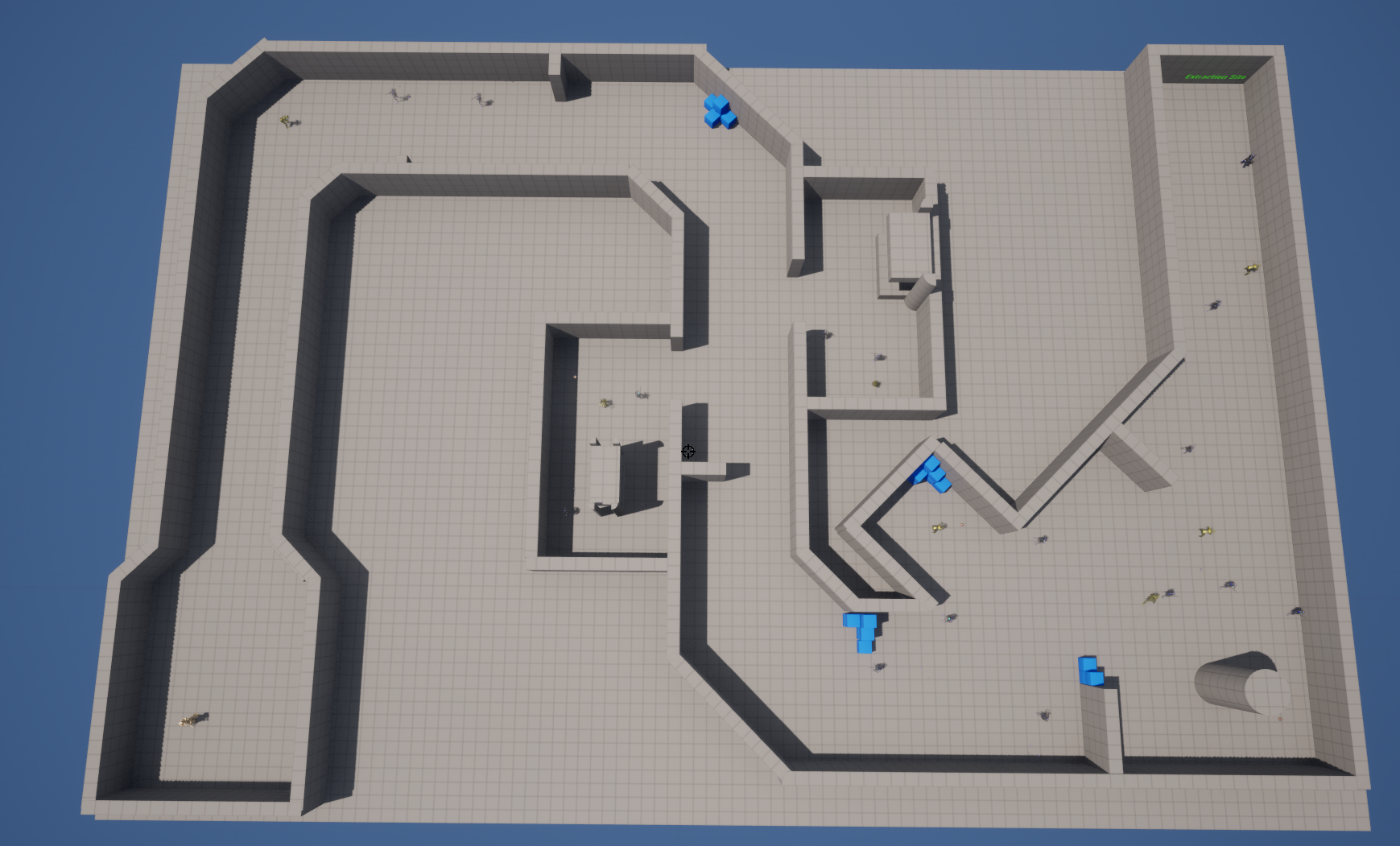
Extraction-based objective and structured level progression
I was responsible for the full design and development of the project, including gameplay systems, level design, UI, player mechanics, and implementation in Unreal Engine. I also designed and conducted the user research, including the experimental design, data collection, and analysis.
My Role & What I Made
System Overview
Tech and Tools Used
Unreal Engine 5 • Blueprints • C++ (logging systems) • Itch.io (distribution)
Design Focus
The project was built around a combat scenario where players encounter both hostile enemies and neutral civilians. I designed the level and encounter flow to naturally create situations where players had to balance aggression and caution, allowing moral behaviour to emerge through gameplay rather than forced choices.
A key focus was testing two conditions: one with explicit moral framing (labelled “good” and “evil” avatars), and one using only visual design cues. This allowed the project to explore how aesthetic elements alone could influence player decision-making.
The results showed that avatar presentation influenced player behaviour, with differences observed between explicitly labelled and visually implied moral identities. This supported the idea that visual design can shape how players approach decision-making in gameplay.
Results
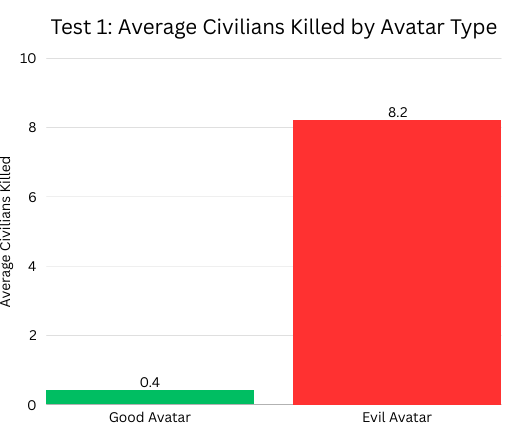
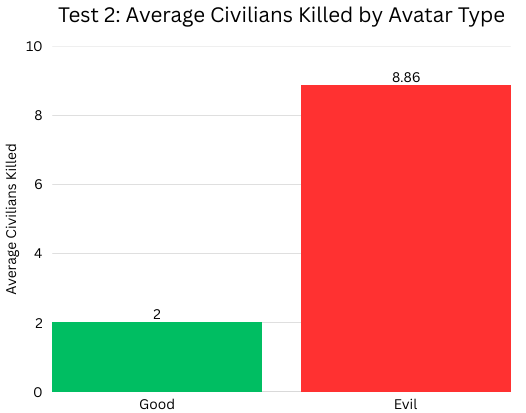
Behaviour differences between avatar conditions